New Book: Six Questions with Harry N. MacLean

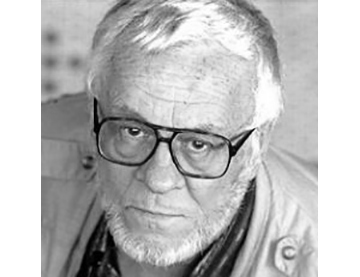
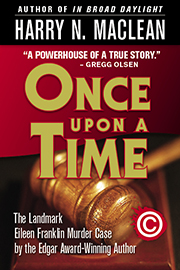
Anyone who knows and loves true crime knows that Harry N. MacLean is one of the best practitioners of the genre. His books are smart, well-written, and full of the kind of depth that makes other writers wonder just how he does it. His first book was the classic In Broad Daylight (if you haven’t read it, skip this interview, order it…and give it read). For those who write in the true crime genre read Harry’s book – that’s how you win an Edgar. He followed it up with another pastisneverdead1.jpgspectacular true crime success Once Upon a Time: A True Story of Memory, Murder and the Law.

The law. That’s key here. Harry MacLean is a lawyer, too. And a good one.

His latest is The Past is Never Dead: The Trial of James Ford Seale and Mississippi’s Struggle for Redemption. With this book, Harry proves just how good he is as a lawyer and author.

You will be riveted. Enough said.

Here’s a snip from the jacket:

On May 2, 1964, Klansman James Ford Seale picked up two black hitchhikers and drowned both young men in the Mississippi River. Seale spent more than forty years a free man, before finally facing trial in 2007. There could have been two defendants in the resulting case: James Ford Seale for kidnapping and murder, and the State of Mississippi for complicity—knowingly aiding, abetting, and creating men like Seale.

In The Past Is Never Dead, best-selling author Harry MacLean follows Seale’s trial, the legal difficulties of prosecuting kidnapping and murder charges decades after the fact, and the strain on a state contending with a past that can’t be forgiven. MacLean’s narrative is at once the account of a gripping legal battle and an acute meditation on the possibility of redemption.

Recently, I caught up with Harry via email. Here’s our six-question interview:

Gregg Olsen: You’ve written two of the best books in the true crime genre…and now this one – another stellar achievement in writing and reporting. There have been a lot of years between books. What is it about the Seale case that got you back behind the computer screen?

Harry N. MacLean: Over the years, I’d followed Mississippi’s successful prosecutions of Klansmen for murders committed in the bloody sixties: Byron De Law Beckwith in 1998 for the murder of Medgar Evers in 1963 and Edgar Ray Killen in 2005 for the murder of Chaney, Goodman and Schwerner in 1964, among others. I was curious whether these were “show trials” or whether Mississippi was really interested in cleaning up its past.  I was also curious how they put these trials together after thirty or forty years, when witnesses had died, memories faded and documents disappeared. When Seale gotseale.png indicted in January 2007, I saw an opportunity to explore these questions and check out Mississippi first hand.

Gregg:  At its core the book is Southern tale of justice denied, then finally, retribution. What part of that appeals to the writer in you? The lawyer?

Harry: Every writer wants to write about the South, I think. It’s such a tortured land, yet so creative and beautiful, with paradox woven into its very fabric, that when a true story like this came along, it was irresistible. Complete innocents beaten bloody and drowned alive in the Mississippi River by men who then walked away and lived full lives as if they’d done nothing more than snuff out a match. In 1964, Mississippi couldn’t have cared less about the murders of Charles Moore and Henry Dee in 1964. Was it still the land William Faulkner wrote about in the fifties and sixties?

As a lawyer, it seemed to me that the prosecution of James Ford Seale was to a large extent serendipitous rather than the result of a rigorous prosecutorial review of long-forgotten race murders: a TV producer looking for a good story on old civil rights murders in the South connects with a man who’d suddenly had enough of feeling ashamed over having done nothing about his brother’s murder for forty years, and who gets a meeting with a U.S. Attorney in Jackson who happened to have served in the same unit as him during the Gulf War.

U.S. Attorney Dunn Lampton had an idea that seemed to have escaped his predecessors in office: Why not immunize one of the two remaining Klansmen involved in the murders and turn him against the other? Lampton contacted the Civil Rights Division HarryNMacLean.jpgof the Justice Department, and he and special prosecutor Paige Fitzgerald turn co-conspirator Charles Marcus Edwards against Seale. The key issue was whether the jury would believe Edwards, who would have to admit to his role in the murders.

Gregg:  Certainly the world has changed – and America right along with it – in the past forty years. Are there other James Seales out there? Do you think this is the last story of its kind?

Harry: There are hundreds, if not thousands, of unsolved lynchings in the South. Many, like the murder of Emmett Till and Charles Mack Parker in Mississippi, date back to the fifties. Alabama is currently prosecuting a former state patrolman for the murder of black civil rights activist Jimmie Lee Jackson in Montgomery in 1965.

Congress has passed a cold case bill proving ten million dollars for a special unit in the Justice Department to prosecute civil rights murders from the fifties and sixties, but has yet to fund it.  The Justice Department is looking at sixteen cases in Mississippi. The cases are growing colder by the day.

There are some in Mississippi, black and white, who doubt the wisdom of prosecuting elderly Klansman for crimes committed forty or fifty years ago. They wonder if scarce resources might not be better used to deal with current problems like the rapidly escalating violent crime in Jackson related to drug use.

Gregg: There have been other cases in which a fugitive from a crime (think 60s radicals) who have disappeared into suburbia and lived exemplary lives, lives that would not have been possible if they’d gone to prison. While Seale’s case isn’t exactly like that, put a question mark at the end of your stunning book’s title. Can the past ever be forgiven?

Harry: That is, of course, the ultimate question.  Charles Edwards, the man who turned on Seale as the primary witness, sat in the witness chair in federal court and asked the families of his victims to forgive him. In a later encounter in a hotel hallway, the brother and sister of the murdered youths told him he was forgiven.

Were it so simthe-past-never-ends-seale-1.pngple for the state of Mississippi. Redemption is a long, hard road, and Mississippi might never see the end of it. But the state is trying. The people are trying. They seem to take one step forward—requiring the teaching of civil rights history in K-12, for example—and then one step backward—voting to retain the Stars and Bars of the Confederate flag as part of the state flag. Mississippi will never be as if the past didn’t happen, but it may come to terms with it in a way that allows it move forward and forever be defined by it.

Gregg: I haven’t read a TC book in a long time that felt as cinematic as yours, has there been film interest?

Harry: Not yet. As for Hollywood and books, I would say this to authors: take your option money and run. Pay no attention to the deal getters and would-be producers until their check clears. If the movie does actually get made, make sure you’re credited properly.

Gregg: What is the status of the case today?

Harry: Seale was convicted of conspiracy and kidnapping. His conviction was overturned by a three-member panel of the 5th Circuit Court of Appeals on statute of limitations grounds. In June of this year the full Court reinstated the conviction on a 9–9 vote. It subsequently voted to ask the Supreme Court to review its decision. The Supreme Court has yet to announce whether it will hear the case.

8 Responses to “New Book: Six Questions with Harry N. MacLean”

  1. Rayvyn Myst Says:

    Ok, just got bit by the curiousity bug… definitely sounds like it is going to be a page-turner so I need to get his book. Thanks, Gregg

  2. UberSpork Says:

    I’m gonna have to check this out.

  3. harry maclean Says:

    I’d be interested to hear what you two think of the book after you’ve read it. It’s a different approach and has a different tone than my previous books.
    Harry MacLean

  4. fifi Says:

    So glad to see a new post! I thought this page was gone!

    Need this book!

  5. jeux xbox 360 Says:

    Thanks for sharing such nice book here. I will buy it and will read it. It is nice and something unique article here. I like this site and will visit this site in future.

  6. harry maclean Says:

    Thanks to Gregg Olsen for keeping it going.

  7. M. William Phelps Says:

    Congrats to Harry on such a wonderful book, and a GREAT contribution to the TC genre. Quality TC books are out there–and Harry proves it with his latest.

  8. Crimerant Blog Archive Six Questions with Harry N. MacLean | Kitchen assistance tools Says:

    [...] Someone I’ve heard of put an intriguing blog post on Crimerant Blog Archive Six Questions with Harry N. MacLeanHere’s a quick excerpt [...]

Leave a Reply

Site designed and Maintained by
Stonecreek Media, Inc
Stonecreek Media