Archive for the ‘True Crime Books’ Category

New Book: Six Questions with Harry N. MacLean

Tuesday, September 15th, 2009

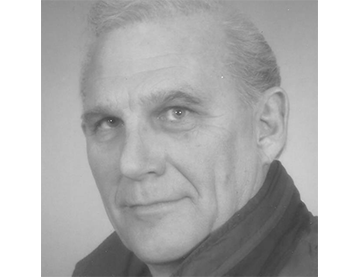
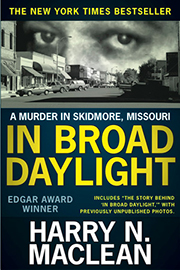
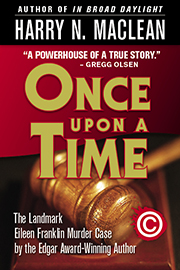
Anyone who knows and loves true crime knows that Harry N. MacLean is one of the best practitioners of the genre. His books are smart, well-written, and full of the kind of depth that makes other writers wonder just how he does it. His first book was the classic In Broad Daylight (if you haven’t read it, skip this interview, order it…and give it read). For those who write in the true crime genre read Harry’s book – that’s how you win an Edgar. He followed it up with another pastisneverdead1.jpgspectacular true crime success Once Upon a Time: A True Story of Memory, Murder and the Law.

The law. That’s key here. Harry MacLean is a lawyer, too. And a good one.

His latest is The Past is Never Dead: The Trial of James Ford Seale and Mississippi’s Struggle for Redemption. With this book, Harry proves just how good he is as a lawyer and author.

You will be riveted. Enough said.

Here’s a snip from the jacket:

On May 2, 1964, Klansman James Ford Seale picked up two black hitchhikers and drowned both young men in the Mississippi River. Seale spent more than forty years a free man, before finally facing trial in 2007. There could have been two defendants in the resulting case: James Ford Seale for kidnapping and murder, and the State of Mississippi for complicity—knowingly aiding, abetting, and creating men like Seale.

In The Past Is Never Dead, best-selling author Harry MacLean follows Seale’s trial, the legal difficulties of prosecuting kidnapping and murder charges decades after the fact, and the strain on a state contending with a past that can’t be forgiven. MacLean’s narrative is at once the account of a gripping legal battle and an acute meditation on the possibility of redemption.

Recently, I caught up with Harry via email. Here’s our six-question interview:

Gregg Olsen: You’ve written two of the best books in the true crime genre…and now this one – another stellar achievement in writing and reporting. There have been a lot of years between books. What is it about the Seale case that got you back behind the computer screen?

Harry N. MacLean: Over the years, I’d followed Mississippi’s successful prosecutions of Klansmen for murders committed in the bloody sixties: Byron De Law Beckwith in 1998 for the murder of Medgar Evers in 1963 and Edgar Ray Killen in 2005 for the murder of Chaney, Goodman and Schwerner in 1964, among others. I was curious whether these were “show trials” or whether Mississippi was really interested in cleaning up its past.  I was also curious how they put these trials together after thirty or forty years, when witnesses had died, memories faded and documents disappeared. When Seale gotseale.png indicted in January 2007, I saw an opportunity to explore these questions and check out Mississippi first hand.

Gregg:  At its core the book is Southern tale of justice denied, then finally, retribution. What part of that appeals to the writer in you? The lawyer?

Harry: Every writer wants to write about the South, I think. It’s such a tortured land, yet so creative and beautiful, with paradox woven into its very fabric, that when a true story like this came along, it was irresistible. Complete innocents beaten bloody and drowned alive in the Mississippi River by men who then walked away and lived full lives as if they’d done nothing more than snuff out a match. In 1964, Mississippi couldn’t have cared less about the murders of Charles Moore and Henry Dee in 1964. Was it still the land William Faulkner wrote about in the fifties and sixties?

As a lawyer, it seemed to me that the prosecution of James Ford Seale was to a large extent serendipitous rather than the result of a rigorous prosecutorial review of long-forgotten race murders: a TV producer looking for a good story on old civil rights murders in the South connects with a man who’d suddenly had enough of feeling ashamed over having done nothing about his brother’s murder for forty years, and who gets a meeting with a U.S. Attorney in Jackson who happened to have served in the same unit as him during the Gulf War.

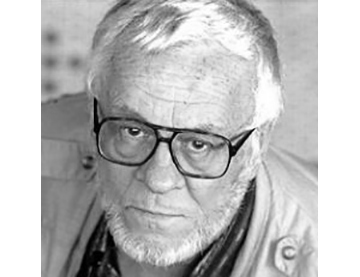
U.S. Attorney Dunn Lampton had an idea that seemed to have escaped his predecessors in office: Why not immunize one of the two remaining Klansmen involved in the murders and turn him against the other? Lampton contacted the Civil Rights Division HarryNMacLean.jpgof the Justice Department, and he and special prosecutor Paige Fitzgerald turn co-conspirator Charles Marcus Edwards against Seale. The key issue was whether the jury would believe Edwards, who would have to admit to his role in the murders.

Gregg:  Certainly the world has changed – and America right along with it – in the past forty years. Are there other James Seales out there? Do you think this is the last story of its kind?

Harry: There are hundreds, if not thousands, of unsolved lynchings in the South. Many, like the murder of Emmett Till and Charles Mack Parker in Mississippi, date back to the fifties. Alabama is currently prosecuting a former state patrolman for the murder of black civil rights activist Jimmie Lee Jackson in Montgomery in 1965.

Congress has passed a cold case bill proving ten million dollars for a special unit in the Justice Department to prosecute civil rights murders from the fifties and sixties, but has yet to fund it.  The Justice Department is looking at sixteen cases in Mississippi. The cases are growing colder by the day.

There are some in Mississippi, black and white, who doubt the wisdom of prosecuting elderly Klansman for crimes committed forty or fifty years ago. They wonder if scarce resources might not be better used to deal with current problems like the rapidly escalating violent crime in Jackson related to drug use.

Gregg: There have been other cases in which a fugitive from a crime (think 60s radicals) who have disappeared into suburbia and lived exemplary lives, lives that would not have been possible if they’d gone to prison. While Seale’s case isn’t exactly like that, put a question mark at the end of your stunning book’s title. Can the past ever be forgiven?

Harry: That is, of course, the ultimate question.  Charles Edwards, the man who turned on Seale as the primary witness, sat in the witness chair in federal court and asked the families of his victims to forgive him. In a later encounter in a hotel hallway, the brother and sister of the murdered youths told him he was forgiven.

Were it so simthe-past-never-ends-seale-1.pngple for the state of Mississippi. Redemption is a long, hard road, and Mississippi might never see the end of it. But the state is trying. The people are trying. They seem to take one step forward—requiring the teaching of civil rights history in K-12, for example—and then one step backward—voting to retain the Stars and Bars of the Confederate flag as part of the state flag. Mississippi will never be as if the past didn’t happen, but it may come to terms with it in a way that allows it move forward and forever be defined by it.

Gregg: I haven’t read a TC book in a long time that felt as cinematic as yours, has there been film interest?

Harry: Not yet. As for Hollywood and books, I would say this to authors: take your option money and run. Pay no attention to the deal getters and would-be producers until their check clears. If the movie does actually get made, make sure you’re credited properly.

Gregg: What is the status of the case today?

Harry: Seale was convicted of conspiracy and kidnapping. His conviction was overturned by a three-member panel of the 5th Circuit Court of Appeals on statute of limitations grounds. In June of this year the full Court reinstated the conviction on a 9–9 vote. It subsequently voted to ask the Supreme Court to review its decision. The Supreme Court has yet to announce whether it will hear the case.

Matt Tangles with a Serial Killer in New Book

Thursday, July 3rd, 2008

You gotta love Matt…if you read TC, that is. No other author is as prolific and as good when watchingyou.jpgit comes to giving readers juicy and insightful reads, one right after another. An amazing feat, really! He’s got another winner out today that would make a perfect companion for the beach this summer.

And the raves are pouring in!

Forensic psychologist Dr. Katherine Ramsland, author most recently of THE HUMAN PREDATOR, calls Matt’s latest book, I’LL BE WATCHING YOU a “tale [that] skillfully balances a victim’s story against that of an arrogant killer as it reveals a deviant mind intent on topping the world’s most dangerous criminals. Phelps has an unrelenting sense for detail that affirms his place, book by book, as one of our most engaging crime journalists.”

Here’s the synopsis from his press package:

In September 2001, Carmen Rodriguez, a beautiful 32-year-old Hartford mother of four, went missing. At first police were stymied…until a killer’s crucial mistake led investigators down a long, dark road of cold, calculated murder…

In 1987, single mother Mary Ellen Renard was strangled, repeatedly stabbed, and left for dead in her New Jersey apartment. Her vicious assailant had already killed once…and would kill again. But unlike the fiend’s other victims, Mary Ellen lived to tell her horrifying tale…

Clean-cut, popular and on the fast track at a multinational computer firm, Rutgers grad Edwin “Ned” Snelgrove shocked friends and colleagues with a plea bargain for Renard’s brutal attack—and the heinous 1984 murder of college girlfriend Karen Osmun. Vowing never to be caught again, Ned spent his time in prison obsessively studying the violent career of his idol Ted Bundy…then was released ten years early for good behavior…

In this creepy tour-de-force, Matt takes readers on an exclusive jaunt into the twisted mind of an all-American serial killer. At one point in the book, Matt becomes part of the story himself as his interviews with Snelgrove turn from scary to chillingly bizarre and even threatening.

“Ned Snelgrove,” Matt told me yesterday, “is one of the most dangerous serial killers in recent memory. Here’s a guy who spent ten years behind bars studying Ted Bundy’s every move so he could be ‘Better than Bundy’ when he got out of prison. The letters he sent me, which I dissect in detail, we some of the most disturbing missives I’ve ever read.”

More disturbing than some of the posts on Crime Rant? Jeesh. That’s saying a lot!

Matt was featured in the Westerly Sun newspaper yesterday (a very influential paper, he tells me!).

Congrats, Matt. I hope everyone in the CR Nation buys the book TODAY.

Journeywoman: Confessions of a Crime Writer

Thursday, June 26th, 2008

singularity casey.jpg[CR Note: Kathryn Casey has always been a favorite here on CR. Her true-crime books show off her great journalism skills and offer readers insight to the crimes most other TC authors simply just don’t. Today we’re celebrating the launch of her first mystery, SINGUALRITY and a new TC, A DESCENT INTO HELL. How does she find the time?]

Guest blog by Kathryn Casey

Cover true crime cases for a couple of decades and every once in awhile it happens: watch the news, read the paper, peruse the Internet, and wham! A news story catches your eye and you’re catapulted years back, maybe to New York, Oklahoma City, Los Angeles or Fort Lauderdale. It’s an odd sensation, kind of like that NBC show Journeyman. Let me explain.

It happened most recently last week. I was checking e-mail, when up popped a news story on 76-year-old Betty Johnson Neumar. Betty’s mug photo was darling, one of the cutest white-haired grandmas I’ve ever seen immortalized by a jail photographer. She even had on a black and white striped sweater, so fitting for prison.

Anyway, this sweet-looking old lady was under arrest for the 1986 murder of her fourth husband, Harold Gentry. Years ago, when the murder happened, there were reports that she’d tried to hire a hitman to gun Gentry down. One man even came forward and told police that she tried to pay him to commit the murder. Yet Betty wasn’t arrested. That might have been the end of the story except for Harold’s brother, Al Gentry, who wouldn’t let the case die. Year after year, he showed up at the AlbemNeumar.jpgarle, N.C., sheriff’s office talking about his brother’s murder and pointing at Betty. For 22 years, Al was ignored. Finally, fast forward, there’s a new sheriff in charge. After talking to Al and nosing around, Granny Betty is arrested and booked.

Then, more surprises. After her arrest, police learn that all five of Betty’s marriages have ended with a dead husband. There’s no info yet on husbands one or two, back in the fifties, but number three died of a bullet to the head. His death was ruled a suicide, but Betty was the only witness. (Convenient, don’t you think?) Perhaps not surprisingly, authorities are now testing the ashes of dead husband number five – who passed away in October 2007 – for arsenic.

So, to get back to my teleporting, there I was reading an article about Neumar when I flashed back thirteen years to 1995 and Steamboat Springs, Colorado.

It was March, snow everywhere, and I was investigating the case of Jill Coit for a magazine article. She was the Black Widow du jour. I call her that, obviously, because there always seems to be one of these babes out there, some woman, not unattractive, relatively bright, with an effervescent personality and a flair for style, who knows how to attract men and then, sigh, kills them and takes their money. In this case, Coit was on trial for murdering her tenth husband, Gerald Boggs, a hardware store owner.

As I circulated thrDescent.jpgough the scenic ski town, I heard familiar refrains. This time they came from Boggs’s neighbors and friends, about how the lifetime bachelor had been hoodwinked by a manipulative and cunning woman, who used flattery and an air of needy vulnerability to reel him in. Coit cemented the relationship by pretending, although she’d had a hysterectomy years earlier, to be pregnant.

After Boggs found out Coit was still married to at least one previous husband, he had the marriage annulled. Guess she wasn’t ready to set the poor guy free, because not long after, along with Michael Backus, a new beau (You’re not surprised, are you?), Coit shot Boggs as he entered his home, then bludgeoned him with a shovel.

Just one dead husband? Nah. A couple of decades earlier, in 1972, Coit’s third husband, William Clark Coit, the father of two of her three sons, was found murdered in their Houston home. No one has ever been prosecuted, but many believed for decades that Jill was the culprit. Rumors circulated, as they did in the Neumar case, but no charges were ever brought.

With memories flooding back, I ran an Internet search on Coit, just to see what this black widow is up to, now that she’s serving a life sentence for murder. One would think that would shut her down. Maybe not.

It seems that even behind prison bars, our gal’s ingenuity and hope springs ecoit[1].JPGternal. A brief search and I discovered that somehow Coit managed to open an Internet site from prison in 1998, to advertise for a new husband. Why would anyone marry this broad? Hey, Jill Coit understands the power of marketing. “Want U.S. citizenship? Marry an inmate!” she suggested. Once they found out, the Colorado Women’s Correctional Institute shut the website down.

Yup, reporting on crime cases for a couple of decades can be injurious to your health. Mental health that is. You begin to wonder if folks are ever going to wise up. You start thinking, heck, it’s how many years later and these conniving women are still reeling in one unsuspecting sap after another? Is this ever going to change?

Sadly, probably not.

Corey Mitchell Covers True Crime

Monday, June 9th, 2008

corey.jpg[CR Note: Today we're joining a virtual relay race to mark the publication of Corey Mitchell's latest TC opus, PURE MURDER which details the rape and murders of Jennifer Ertman and Elizabeth Pena. Most TC readers know that Corey is a law school graduate and the author of the Los Angeles Times bestseller DEAD AND BURIED, as well as MURDERED INNOCENTS and STRANGLER. Be sure to follow Corey Mitchell's Pure Murder Virtual Book Tour by visiting his AmazonConnect tomorrow, June 10.]

CR: How much input do you have on your book covers and titles?

CM: Let’s just say I am allowed to submit titles, but not necessarily encouraged to fight for them.

CR: Have you ever submitted a title you loved, but had to settle for something you just didn’t think was as good?

CM: Pure Murder.jpgI’ll let your readers decide — I’ll post the original title submitted by me and the end result:
 
L.A. Murder Maps –> Hollywood Death Scenes
Infinity –> Dead and Buried
Faces of Angels –> Murdered Innocents
Evil Eyes –> Evil Eyes
Ego Maniac –> Strangler
Pure Murder –> Pure Murder
 
So, I’m batting 40%. Of the titles that were changed I really like Hollywood Death Scenes. I am not a fan of Strangler at all. Ego Maniac was a much more appropriate and evocative title for serial killer Anthony Allen Shore.
 
Kensington has already shot down the title for my next book on Bart Whitaker. I wanted to call it The Unusual Suspect because he thought he was Keyser Soze and could commit the perfect crime and get away with it. My editor did not believe is was enough of a grabber.

The “Word of the Day” is: AND

So, Crime Rant readers, what do you think? What TC titles turned you on? Off?

Site designed and Maintained by
Stonecreek Media, Inc
Stonecreek Media