Archive for the ‘The Deep Dark’ Category

To Boise State University: A Note of Thanks

Saturday, October 13th, 2007

I wanted to give a little shout out of thanks to the faculty, administrators, and studentsBoise State University Mascot Buster Reads The Deep Dark.jpg of Boise State University for their wonderful hospitality earlier this week when they hosted me in recognition of THE DEEP DARK. As most CR readers know, my book about the Sunshine Mine fire of 1972 was selected for BSU’s First-Year Read program.

I had the pleasure of making several presentations alongside Peggy DeLange-White (her father Gene Johnson died in the fire) and Bob Launhardt (the safety engineer at the time).

I will never forget the experience. There are two moments that stand out that I wanted to briefly share here.

The first came when a student named Shawn came up to me after a talk. He told me that he was 31 and hadn’t read a book since high school. When he was handed the book as a part of the required reading program for all incoming freshmen, he begrudgingly opened its pages. Something magical happened….Shawn couldn’t stop reading. He found himself in the mine with the men trapped underground, caring about them, and wanting to know what happened next. Shawn told me that the book brought him back to reading. Now and maybe forever.

That’s what a writer longs to hear. I heard it from others, too.

The other came from the brother of a cager who made it out of the smoke-filled mine on May 2, 1972. Ron wasn’t happy with his brother’s portrayal in THE DEEP DARK. It made him look like a coward, he said, confronting me during a panel discussion. I told him I did the best I could when I wrote the book and I stood by the accuracy of my work. Since leaving Boise, I’ve thought about what Ron said and how he felt. I realize more than ever the power of the printed word and how it can impact people long after the writer is done with his or her job. No harm was meant to Ron or his family, of course. I only wish that I’d been able to locate his brother when I wrote the book five years ago.

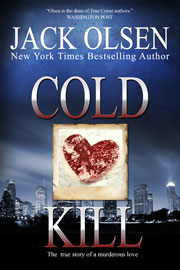
PS: The Albertsons Library staff created a series of posters to promo the book. The one shown here is one of my favorites. How many books does Buster the bronco read? Pretty cool, huh?

Weekend Hangover: Utah Mine Tragedy and Michael Vick

Sunday, August 19th, 2007

michaelvickcourt.jpgA couple of stories — the trapped miners and Michael Vick – being followed by CR readers generated a bit more news over the weekend.

Utah Mine Tragedy

In the case of the trapped six miners in the Crandall Canyon Mine, this update came on Sunday:

HUNTINGTON, Utah (CNN) — Families of the trapped six miners accused those in charge of rescue effort of having “given up” on the missing men.

In a statement read by a spokesman, the families urged the Utah mine’s owner and federal officials to drill a hole into the mine large enough to send down a rescue capsule.

“Precious time is being squandered here, and we do not have time to spare,” the spokesman, Sonny Olsen. He was flanked by dozens of relatives Sunday.

The families expressed their sorrow for the three men who were killed in a rescue effort Thursday. But they said they still held out hope “that our loved ones are still alive and are waiting to be rescued.”

Rescue teams have drilled four narrow holes into part of the Crandall Canyon mine since the August 6 cave-in. View photos from the rescue efforts »

But after the latest attempt yielded no signals from the miners and found only low levels of oxygen, one of the leaders of the effort said Sunday the vestiges of hope are waning.

“It’s likely that these miners may not be found,” Rob Moore, vice president of mine operator Murray Energy, told reporters earlier Sunday.

There was no immediate response from the company or from the federal Mine Safety and Health Administration, which the families also criticized.

“We feel that they’ve given up, and they’re just waiting for these miners to expire,” Olsen said.

The families demanded that MSHA and Murray Energy begin drilling a hole into the mine large enough to drop in a rescue capsule — a device used to haul nine miners to safety after a 2002 accident at the Quecreek Mine in southwestern Pennsylvania.

“The family feels that the rescue capsule is the safest and most effective method to rescue their loved ones,” Olsen said. “If rescue is not possible, the capsule is the only method to recover our loved ones so that they can have a proper burial.”

As a side note, the rescue capsule was used in 1972 when rescue crews used it to bring out Ron Flory and Tom Wilkinson, trapped in the Sunshine Mine.

The Vick Case

A grand jury is scheduled to convene tomorrow in in the continuing case of Atlanta Falcons quarterback Michael Vick and three co-defendants indicted on dogfighting charges.

According to CNN:

There’s no indication whether the grand jury will take up further allegations against Vick, although federal prosecutors have said they plan to seek a superseding indictment in the case.

That would mean more charges against Vick, the lone defendant who has not been convicted now that all three of his co-defendants have reached plea deals.

Vick’s attorneys were negotiating with federal prosecutors last week, hoping to strike a deal on a plea agreement.

“It seems to be a pretty clear indication there will be some sort of plea entered,” Falcons owner Arthur Blank said Friday.

Prosecutors have declined to comment outside court on negotiations with Vick’s attorneys. Collins Spencer III, a spokesman for Vick’s defense team, said Sunday there was nothing new to report.

Vick’s last two co-defendants pleaded guilty Friday and said he bankrolled gambling on dogfights at Vick’s property in rural Surry County, not far from his hometown of Newport News. One said Vick helped drown or hang dogs that didn’t do well.

Quanis Phillips of Atlanta and Purnell Peace of Virginia Beach entered plea agreements and agreed to testify against Vick. Tony Taylor of Hampton struck a similar deal last month.

The gambling allegations alone could trigger a lifetime ban under the NFL’s personal conduct policy.

Of course, we’re all wondering if Vick will make a last minute plea as was expected on Friday. We’ll see.

Sunshine Mine survivor Ron Flory talks with USA Today

Wednesday, August 15th, 2007

USA Today didn’t mention THE DEEP DARK, but the paper did do a nice little interview with one of thRonFlory.JPGe main players in the saga of the Sunshine Mine fire.

Survivor of 1972 disaster recalls ‘darkest dark’

By Andrea Stone, USA TODAY

If any of the six miners trapped 10 days ago in a Utah cave-in are still alive, Ronald Flory has an idea what they’re going through.

Flory survived eight days underground after a fire broke out in the Sunshine silver mine near Kellogg, Idaho, in May 1972. One of the worst mine disasters in U.S. history, the fire killed 91 miners. Only two, Flory and his friend Tom Wilkinson, came out alive after spending more than a week 4,800 feet down.

Read the rest of the USA Today story and comment there.

Of course, all of this is tied to the Crandall Canyon, Utah, mine rescue still limping along in Utah. Tonight it was reported that sounds were heard underground, once more fueling hope.

Sound familiar? Sure does. Ask Ron’s family. They (and Tom Wilkinson’s) were the lucky ones. Ninety-one others died. Let’s  hope the six in Utah make it home, too.

As a side note, I talked with Ron this afternoon about an event we’re doing in October and he said ”some reporter” called and did an interview, but he didn’t know what paper. Gee, dude, USA Today isn’t the New York Times, but it is a lot bigger paper than the Smelterville Gazette! 

From the Deseret News: Writer remembers anguish of ‘72 mine fire

Monday, August 13th, 2007

 [CR Note: Still no word on the Utah miners. Today marks the eight day of the Crandall Canyon mine ordeal. The Deseret News did an interivew with Gregg on Friday. Here's editor/writer Amy Joi O'Donoghue's story.]

Miner mentality, hope of families stick out for him

HUNTINGTON — It will forever be known as the heartbreak of Huntington.

Whether the six men trapped in the belly of the Crandall Canyon Mine emerge as survivors or if they’ve perished or if only one survives, the waiting, the hoping, the longing for information will leave an indelible footprint on the brotherhood of a community that has to endure the minutes, hours and days of the unknown.

Gregg Olsen knows.

A best-selling New York Times author, Olsen spent four years researching the Sunshine Mine disaster in Kellogg, Idaho, where 91 miners died, 83 others were able to escape initially and two men survived for eight days before they were rescued.

How did they survive?

On one rotten tuna fish sandwich, a little bit of water and a lot of prayers.

“Knowing these two guys, they would tell the six to buck up and you will get through this because you are strong and full of spirit.”

Olsen wrote “The Deep Dark” based on the May 2, 1972, fire in the silver mine of Sunshine, which was never supposed to burn, interviewing survivors, widows and government officials about a story that had never been told.

The fire created thick deadly columns of smoke that were an instant killer more than 4,000 feet below ground. It also created heroes as they rescued co-workers and perished in the process.

Olsen lives in Washington and is watching the events of Crandall Canyon unfold with hope, despair and a kinship that can only come with getting buried deep in the miner mentality.

“These miners, the truth of it is, they will leave no man behind. They really do look out for each other. If a couple of them are weak, hurt, their buddies are going to do everything they can to keep them alive. There is going to be nobody who is trying to dig their way out on their own.”

Olsen has written a number of true-crime novels, exploring the crazed depths of murder, mayhem and of people doing unspeakable things to each other. Crime is gritty and hurts. But he said nothing prepared him for Sunshine and the waves of grief that continue to ripple years later.

“It happened when I was a teenager. You have 91 dead neighbors, fathers and brothers in the same town. I waited 30 years, and I decided I would write the book. … It was the most depressing thing I had ever done. I was never prepared for this idea of shared grief, this bond of grief that they could never get rid of.”

Olsen says that same bond is playing out now in Utah’s coal-rich country, where hope is like sunshine or the wind, and the desire is that it brushes up against the families and brings comfort.

“I know they can’t eat, they can’t sleep and they spend a lot of time talking to God and hoping their husbands come home. It’s really that basic.”

Even though it was decades after the Kellogg mine disaster, Olsen said the time spent interviewing survivors taught him that the tragedy of one single day is not erased by time.

“Without exception, every single man I interviewed cried. They could not get over it. It was that horrific.”

The two who lived, who survived that terrible day, would forever go on to be the ones branded.

“The hardest thing was being the survivors. The ones who lived. That is what they were known as.”

As each day passes, the anxiety and tension mount and despair is tempted to reach as deep as the caverns of the mine, Olsen is not dissuaded by what he sees.

Through tears and not knowing, Olsen recalls Sunshine and two who walked away. After eight days.

“It was a huge miracle for those two guys. Keep the faith. Miracles happened up in 1972 in Idaho. When those two guys got out, there was great joy for everybody. That two of them could live was a beautiful thing for the whole community. Even if one comes out, it will be a great joy for everybody.”

Site designed and Maintained by
Stonecreek Media, Inc
Stonecreek Media